
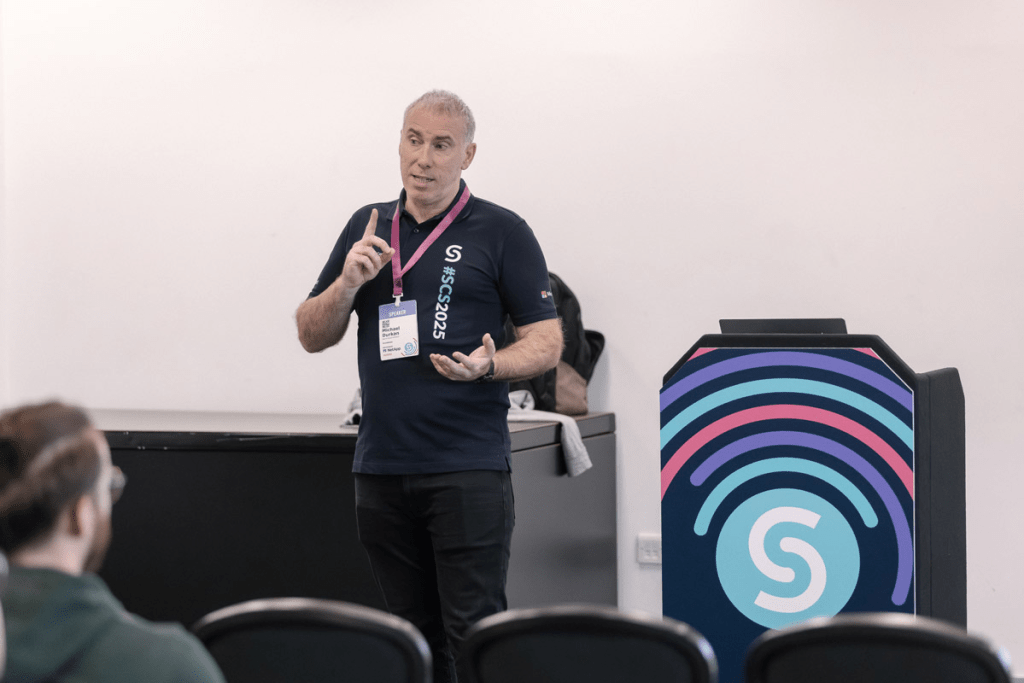
2025 was a great year for me from a community speaking perspective. I had the opportunity to speak in-person at conferences like South Coast Summit, Nordic Integration Summit, and Global Azure and AI Community Day, and virtually at community events like Azure Back to School, India Cloud Security Summit and Festive Tech Calendar.
The one question that people keep asking me is: How do you get started as a public speaker?”. The answer usually surprises people.
You probably already are one.
Public Speaking Isn’t Where You Think It Starts
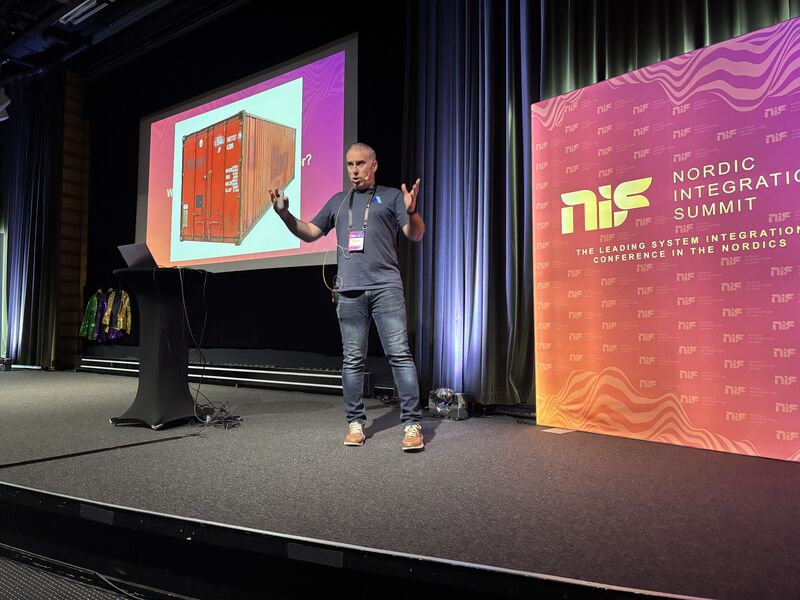
When people hear “public speaker,” they often picture a conference stage, a headset microphone, and a perfectly polished slide deck and demo.
But that’s not where public speaking actually begins. If you’ve ever:
- Presented a solution to a client
- Walked an internal team through an architecture decision
- Explained why a particular design choice mattered
- Defended a proposal in front of stakeholders
Then congratulations—you’re already doing the hardest part.
You’re communicating ideas, adapting to your audience, answering questions, and telling a story with a beginning, middle, and end. The only real difference between that and a community talk is the room you’re in.
From Meetings to Community Stages
The journey from a meeting room to a community stage isn’t about learning a completely new skill. It’s about refining the one you already have. At its core:
- A client meeting is storytelling under pressure
- A community talk is storytelling with support
Community audiences want you to succeed. They’re there because they care about the topic, not because they’re trying to approve a budget or poke holes in a proposal. The tech community doesn’t require or want perfection – we thrive on real-world experiences and shared honestly. The community doesn’t show up to your talk to learn what to do. We want to hear your story, and learn what actually happened when you tried it.
So where do I start?
The first thing to do is to actually attend a conference as an attendee. Get yourself out there and introduce yourself to people in the community. We don’t bite – we’re all real people as well. Go to the sessions at that conference on topics that you are interested in. Watch the presenters and how their sessions flow and work. And go introduce yourself to the presenters afterwards – give some feedback and ask some questions.
Once you have that first experience, start somewhere safe.
- An internal lunch and learn
- A team brown-bag session
These environments are supportive by design. People expect experimentation, not perfection. Don’t send the essay-style email when you have found and solved a problem – gather your team for 15 minutes over lunch and explain what you found, how you solved it, the lessons you learned and how you can apply these lessons next time.
You have your first talk – what happens now
Now that you have a talk, the next step is to turn it into a session. The basic premise is when you encountered a problem or had to explain a solution to someone:
- What problem were they trying to solve?
- What options did you consider?
- What trade-offs did you make?
- What would you do differently next time?
That conversation is already the outline of a community session. Add slides and/or a demo, structure it with a problem, solution and outcome, and suddenly you have a talk that’s grounded in reality—because it came from real work.
For most conferences, your talk is going to be either a 15-20 minute lightning talk, or else a 35-50 minute session. A hack that I’ve used to time my sessions is having a script per slide and a script for your demo. Your slides should be bullet points along with graphics or diagrams, and you then need to talk through the demo as well. Having this scripted out means you can practice and time yourself on how long the session will take to deliver.
Once you have the session done, you need to prepare your session abstract which is normally done by setting up a profile on Sessionize or Run.Events. Writing the abstract is important, and my friend and fellow MVP Zoe Wilson has written a great post on how to write a great session abstrat, which you can find at this link.
Where do I find events to submit to?
So now that you have your session, you need to submit it somewhere. And there’s a few options here:
- Virtual Events – these are a great starting point, as they are normally events which require you to submit either blog posts or pre-recorded content. There’s also normally no “entry criteria” as all sessions are automatically approved. These events are great starting points to grow your presence in the community, and run at the same times every year. As well as the ones I’ve mentioned above, check out Azure Spring Clean, Cyber Back to School and WeDoAI (these are just some examples).
- User Groups – remember that speaker that you went and gave feedback to above? There’s a good chance they are involved or know someone who is part of a User Group. User Groups like Welsh Azure (run by John Lunn aka Jonny Chipz) and Microsoft Azure Community (Run by Kevin Greene and Nicholas Chang) are run virtually, whereas Glasgow Azure (run by Sarah Lean and Gregor Suttie) is run in-person, so there’s a good balance depending on where you are located. Again, attend as an attendee – these are good fun and some have quizzes, spot prizes and refreshments for the in-person ones!
- Conferences – if you’ve spoken or submitted to the first 2, then the live in-person conference is the next step. As I said above, these are welcoming environments where everyone is supported.
You can find all of these in a few ways. I mentioned Sessionize and run.events, and you can also find an extensive list of upcoming conferences for both attendees and speakers at https://www.communitydays.org/. Also, start following or connecting with folks from the community on socials – we normally share user groups and CFS links for events and conferences.
You will get rejected, but keep going!!
My Sessionize profile has quite a lot of red in it:
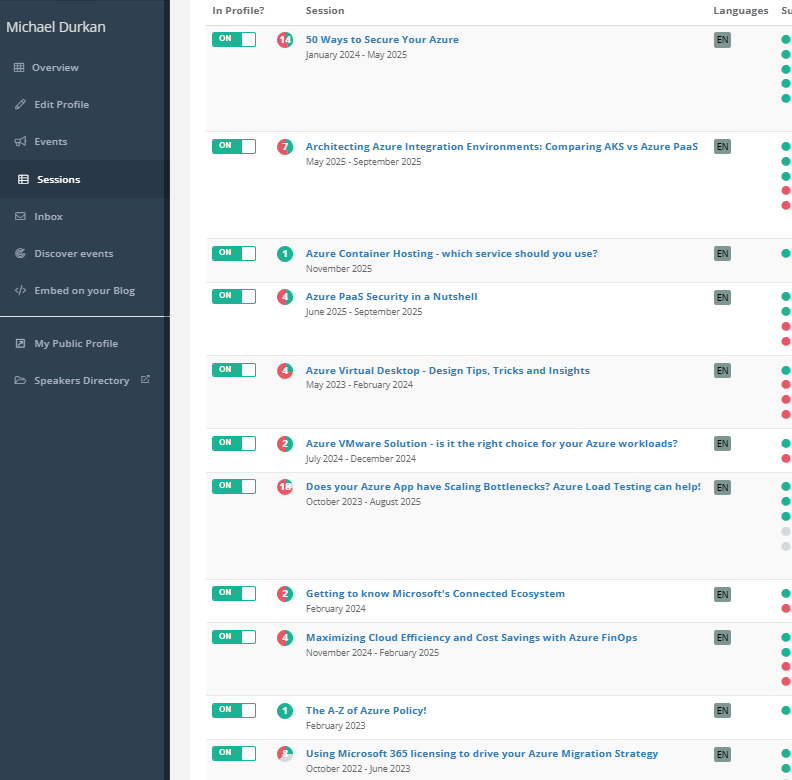
But thats OK – I don’t expect to be selected for every single session I submit to every conference or User Group. The difference between people who “can’t speak” and those who do regularly isn’t talent, it’s persistence. Keep submitting your sessions – the rejections can sting at the start but just keep going.
The best advice here is to reach out and ask for advice – the conference organisers have hundreds of sessions to choose from and can’t give feedback on every single rejected session. If thats happening, reach out to someone in the community for help – again, we are all humans and have all gone through this. Sometimes its something as simple as the wording, the title, or a little tweak that needed.
Final Thoughts
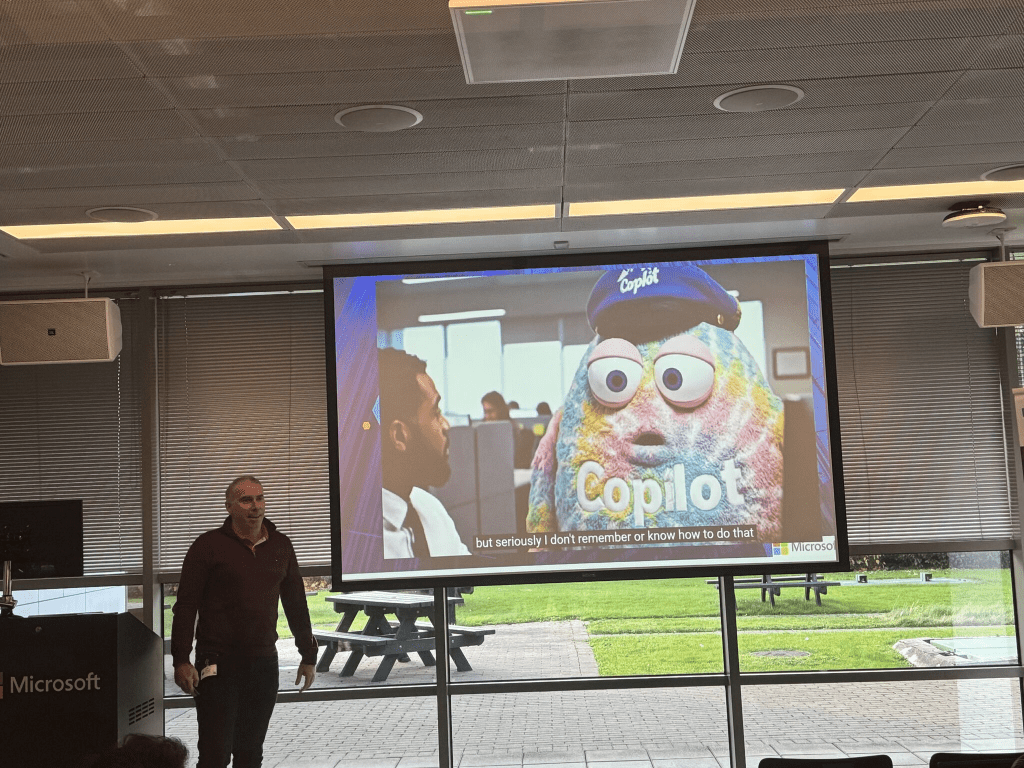
Community speaking isn’t a performance, it’s a conversation, just at a slightly larger scale. You’re not there to prove how much you know, you’re there to share what you’ve learned so far. If you’ve ever explained a technical decision to another human being, you already have what it takes to be a community speaker.
 Michael Durkan