
Why we welcome some AI into our lives without a second thought, and pour scorn on the rest
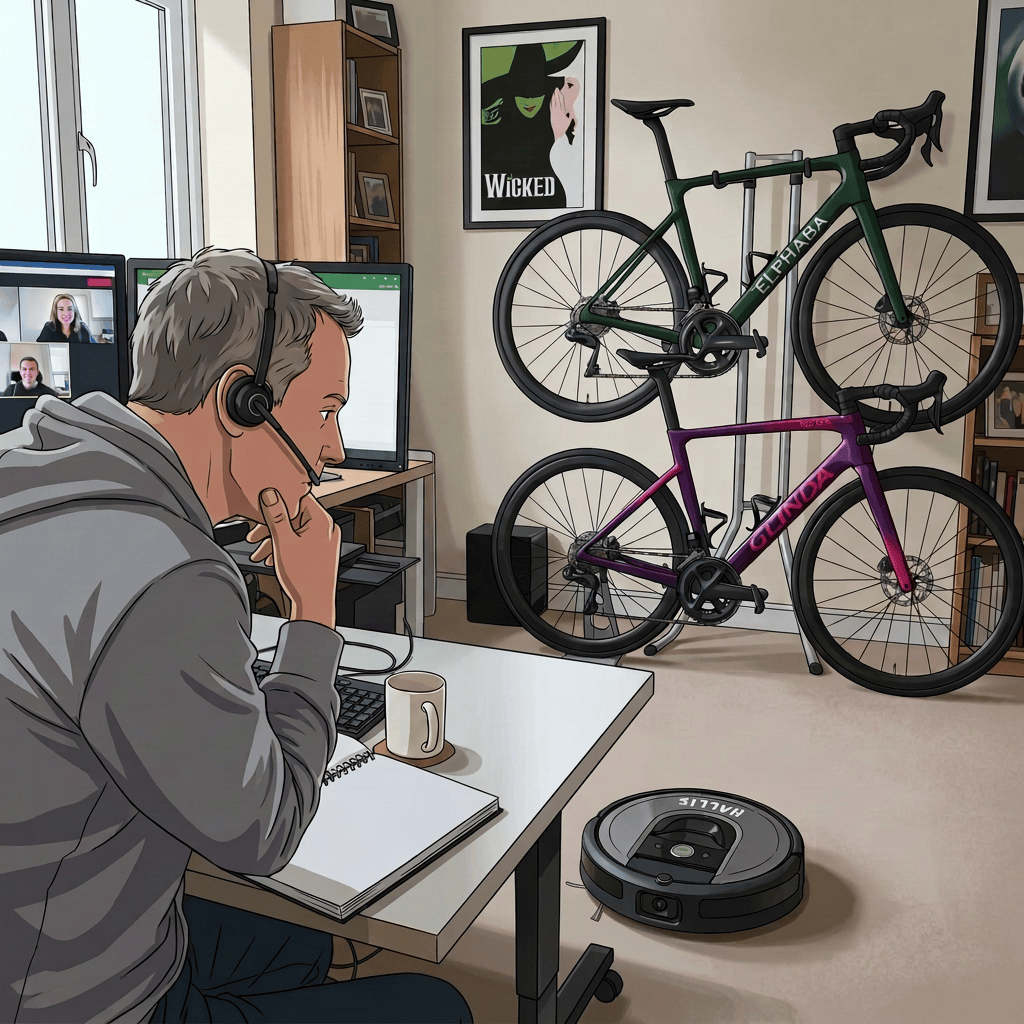
Everything that is automated or moves gets a name in our house. It’s a tradition we’ve continued since our children were small. I’ve had cars with various names, from Marty Mondeo to my current Pedro Peugeot. My cycling-mad wife doesn’t escape: she has two racing bikes in dark green and purple/pink which my drama-mad daughter has gleefully named Elphaba and Glinda. The most recent addition to our stable of “things that move and need a name” is our robot vacuum, which we have named Hallie.
Normally, Mondays are work-from-home days for me and it’s when Hallie gets to work. I set Hallie off to whatever rooms need attention and go back to my desk, and at some point it trundles into the office, steering round the chair legs with a camera on its nose. I was on a client call when Hallie entered a few weeks ago, and I caught myself watching it and asking a question I had never asked before. Is that camera only stopping it hitting the wall? Does it have a microphone? Is it listening not just to this call, but to everything we do day-to-day?
This led me down a rabbit hole, and my digging turned the question turned into a bigger one: why do we welcome some AI into our lives without a second thought, and pour scorn on the rest?
And before anyone asks – yes I quite obviously generated the image above using AI, and no my office is not that tidy ….. moving on …..
The Robot in the Room
So, is Hallie listening? The honest answer is neither “of course not” nor “they are all spying on us”. Many camera-guided vacuums carry a microphone for a built-in voice assistant (Ecovacs’ Deebot range answers to “OK YIKO”), and the same research that exposed Ecovacs vacuums covered its robot mowers too. The documented incidents are real:
- 2024, Ecovacs. At DEF CON 32, researchers showed Ecovacs vacuums and mowers could be taken over via Bluetooth, camera and microphone included. Owners in several US cities later reported Deebot X2s shouting abuse through their speakers.
- 2026, DJI. An engineer steering his DJI Romo with a games controller found he could reach live camera feeds, microphone audio and floor maps for nearly 7,000 vacuums in 24 countries. DJI says it patched the flaw in February.
The important thing to say here is that I have found no credible evidence that robot vacuums are designed to secretly record conversations. The documented failures the same thing we’ve seen for years in technology as the primary drivers of most security incidents and data leaks: weak authentication, shared encryption keys, data kept too long and people with access who should not have it. The device does not need to be malicious. It only needs to be insecure.
So if we break this down: the vacuum does a job, it does not pretend to be me, and its risk is invisible. Remember those three points, because they come up again as we step through the post.
Alexa, what time is it …..
We have been here before. Siri arrived in 2011 and the Amazon Echo in 2014, and within a few years an always-listening microphone on the kitchen counter was completely normal. With it came a suspicion that never quite went away: that Alexa or a Nest speaker is quietly recording every conversation in the house.
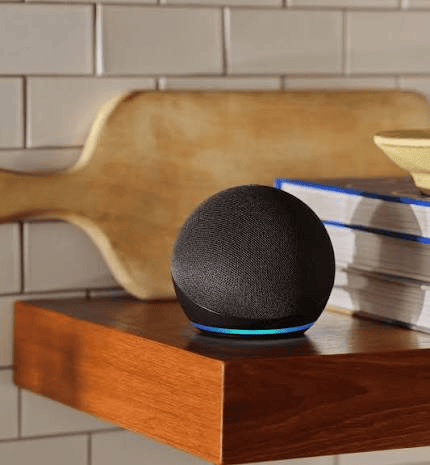
Amazon says Echo devices detect the wake word locally and only send audio once they hear it. But the record does not let the vendors off the hook. In March 2025 Amazon removed the option on some Echo models to keep voice requests off the cloud. In 2023 it paid $25 million to settle FTC allegations over retaining children’s Alexa recordings, and $5.8 million over Ring, where a former employee spied on customers through their cameras. Amazon denied breaking the law in both cases.
The danger was never a speaker secretly transcribing dinner. It was recordings kept too long, a privacy setting quietly withdrawn and people with access they should not have had. And still the speaker stays on the counter because our quest for convenience won that argument a decade ago.
The AI Pair Programmer
As technology professionals, the same pattern of convenience has followed us into our working lives. In 2021 GitHub Copilot arrived as an AI pair programmer that sat beside you across your SDLC, in whatever language you were working in.

Like everything, it has evolved into something more than it was originally intended to do. Between GitHub Copilot’s agentic features, Claude Code working directly in the terminal and the repository, and the preview Code capability in the Copilot, which builds hosted internal apps from a plain-language description, the assistant has stopped sitting beside you and started taking the keyboard.
Think about how most Azure Landing Zone deployments have been built: Terraform modules written by hand, networking blocks copied from whatever repo worked last time. Microsoft already gives us Azure Verified Modules, a supported library of Bicep and Terraform modules, and GitHub is full of real-world templates. Put GitHub Copilot on top, across the full deployment lifecycle, and you get what I’ve started referring to as Infrastructure-by-Prompt (IbP).
I wrote on LinkedIn recently that IaC is being replaced by IbP, and that we’re entering a time where the quality of your cloud infrastructure will be defined by the quality of your prompt. What IbP replaces is the hand-authoring: the artefact in the repository is still Bicep or Terraform, still reviewed, still deployed through a pipeline.
The bar to entry has dropped dramatically, but with it comes problems. Agent-generated templates fail quietly in the same places hand-written ones do: hard-coded SKUs, public network access left enabled, diagnostic settings missing. The answer here is to tell the agent to build on AVM modules, and keep every gate you would apply to a human change: a what-if or plan in the pull request, policy as code, and a named human reviewer who actually understands what has been produced before approving it.
We can accept the entry bar dropping, but the bar for production must not. Otherwise we’re just deploying slop into Production without any governance, controls or supportability.
Lets be clear on this: IbP sits longside the robot vacuum, it does a job and its risk is invisible until something goes wrong. An IbP template nobody reviewed is slop with a blast radius.
The Slop Button
Which brings me to the one place we have decided to push back. Open your LinkedIn feed at any time, and you’ll be confronted by carousels and posts with lists about Agent governance that all look and sound the same, but still subtly different.
In July LinkedIn added a “Seems like AI slop” option to the three-dot menu on posts and comments. LinkedIn called AI slop a top priority, shipped new classifiers alongside the button and quietly retired its own AI “enhance your post” feature.
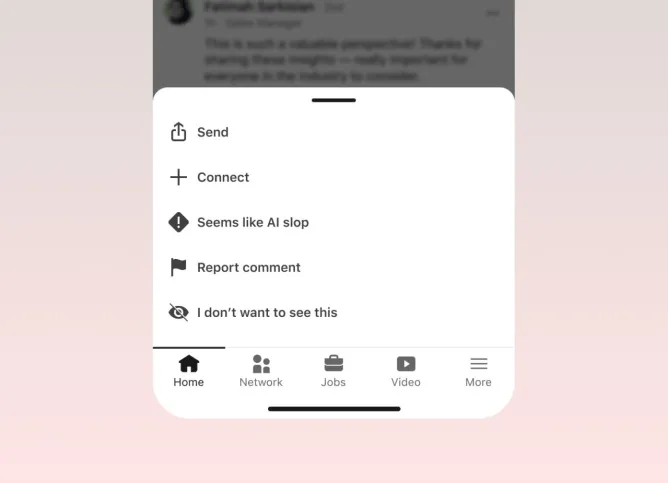
In August, The Register reported that more than a million members had used the button, and that copy-pasted AI posts were seeing around 40% fewer views. AI Detection firm Pangram flagged over 40% of long LinkedIn posts as fully AI-written (these were posts seen by users of its own Chrome extension).
What’s interesting is the attitude shift. Two years ago, “I used AI to write this” was a productivity humblebrag. Today people hide it. Yet LinkedIn has been explicit that using AI and producing slop are not the same thing. That distinction is the whole argument.
The Sliding Scale of Trust
Put those stories side by side, add the clearest case of AI we have chosen to trust, and a pattern appears. By March 2026 Waymo was reported to be delivering roughly 500,000 paid driverless rides a week across 10 US cities, and in April it moved its London fleet to autonomous driving with specialists behind the wheel.
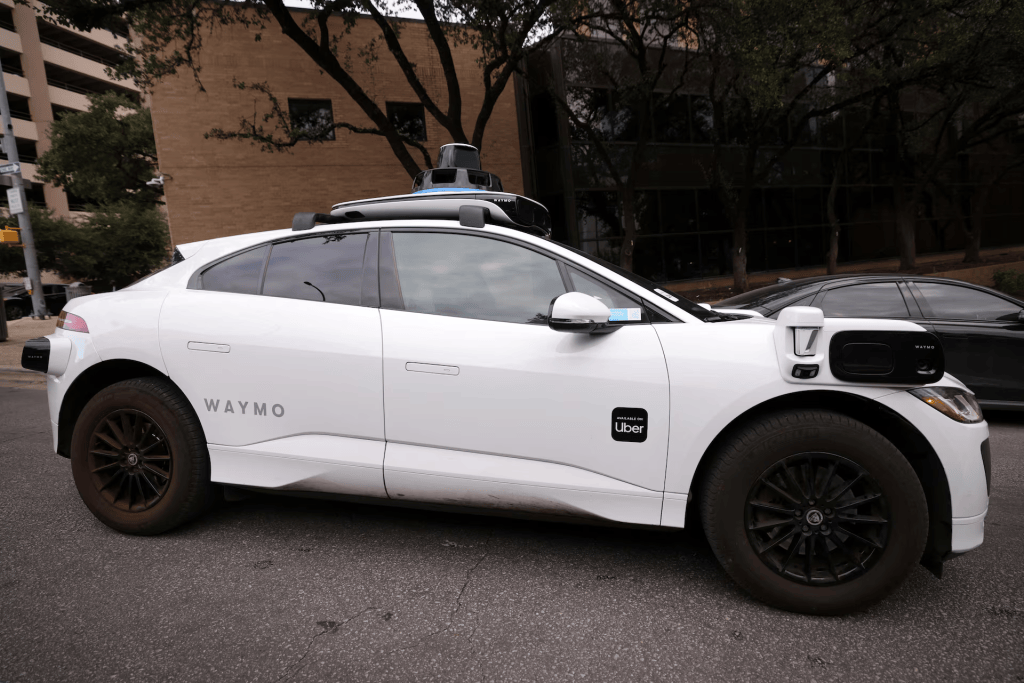
Lets stop and think about this – we have no issue with letting AI-powered software drive us home, yet we flag a LinkedIn post for sounding too smooth.
| Trust | Example | Does a job or speaks for us? | Who put in the work? | Is the risk visible? | Our reaction |
| Most | Fraud detection, spam filters | Does a job | The vendor | No | Not noticed at all |
| Robotaxi | Does a job | The operator, over years | Yes, very | Accepted, with scrutiny | |
| Robot vacuum | Does a job | The vendor | No | Welcomed, rarely questioned | |
| Smart speaker | Does a job, and listens | The vendor | Partly | Accepted, with suspicion | |
| IbP template | Does a job for you | The engineer, if reviewed | Only if you review it | Embraced, often under-reviewed | |
| Least | AI-written post under a human name | Speaks for us | The reader | Yes, to the reader | Scorned |
Three questions decide where something lands. Does it do a job, or does it speak for us? Who put in the work to make it good: the maker, or the audience left to sift through it? And can we see the risk?
Our assessment of trust for each case follows the first two questions and largely ignores the third. The robotaxi earns its place: its risk is obvious, and the operator spent years paying it down in public. The vacuum and the speaker sit higher than their record justifies, because their risk is out of sight. The AI-written post is scorned hardest, when the worst it usually does is waste a minute of your attention. On that third question, we have the scale upside down.
IbP is the one to watch, because it can land anywhere. Grounded in verified modules, planned and reviewed, it is the robotaxi. Unreviewed, it is slop, carrying the hidden risk of the vacuum.
Conclusion
The practical guidance is the same at home and at work. Know what the thing can reach, and limit it.
At home, turn off the vacuum’s voice assistant if you never use it, schedule the clean outside call times, don’t have calls in the same room as the speaker, and put IoT devices on their own network segment. At work, make agent identity and actions visible, keep a human in the loop on anything that speaks or deploys under your name.
We did not stumble into this era, we built it – one convenience at a time, from the speaker on the counter to the vacuum under the desk to the agent in the pipeline. The LinkedIn backlash is not the public turning against AI. It is the public drawing a line between AI that serves them and AI that performs at them.

